The Complete Guide to Skin Health After 40 in 2026
Key Takeaways
- ✓ Collagen production declines steadily after 30, but you can support your skin's natural collagen through sun protection, nutrition, hydration, and targeted skincare ingredients.
- ✓ Sun protection is the single most important anti-aging habit—about 80% of visible skin aging comes from sun exposure, making daily SPF non-negotiable.
- ✓ Key nutrients like hyaluronic acid, antioxidants, and protein become increasingly important after 40 for maintaining skin moisture, elasticity, and firmness.
- ✓ Lifestyle factors including sleep quality, stress management, exercise, and avoiding smoking directly impact skin aging—sometimes more than topical products.
- ✓ Consistency matters more than complexity; a simple, consistent routine beats an elaborate routine you don't stick with.
- ✓ Natural ingredients have research support, but 'natural' doesn't automatically mean effective—evaluate products based on evidence rather than marketing claims.
How Your Skin Changes With Age
You're looking in the mirror one morning and suddenly noticing things that weren't there before — a fine line around your eyes, a loss of that plump firmness you used to have, maybe some spots you can't quite explain. Sound familiar? Here's the thing: your skin doesn't just wake up one day and decide to age. It's been gradually shifting since you hit 30, and by the time you reach 40, those changes become much more noticeable and measurable.
At the cellular level, your skin is experiencing some pretty significant transformations. Collagen production drops by approximately 1% each year after age 30, which means by 40, you've already lost about 10% of your skin's structural foundation. Elastin — the protein that keeps your skin bouncy and resilient — becomes less flexible over time, making it harder for your skin to snap back after being stretched or compressed. On top of that, your skin's natural ability to retain moisture decreases substantially because you're producing less hyaluronic acid and your skin barrier is becoming thinner. These aren't just cosmetic changes; they're real physiological shifts happening in your dermis and epidermis.
Research consistently shows that environmental factors play a major role in accelerating these natural aging processes. Studies on photoaging demonstrate that cumulative sun exposure accounts for roughly 80% of visible skin aging, meaning the damage from those beach days in your twenties and thirties is now showing up on your face. Your genetics also matter — if your parents aged quickly, you might too — but the research is pretty clear that lifestyle factors like sleep quality, stress management, and skincare habits can either speed up or slow down the process.
If you live in Arizona or Florida, you've probably already noticed more sun damage than friends in less sunny climates. The UV exposure is just more intense and more frequent year-round. That's not a random observation — it's backed up by dermatologists who see firsthand how geography impacts skin aging rates. The good news? Knowing this means you can adjust your approach based on where you live and your personal risk factors.
There's a myth floating around that aging skin is just something that happens to you — that you're passive and it's inevitable. But that's not entirely accurate. Yes, chronological aging happens to everyone, but the rate and severity of those changes? That's something you can influence. Your skincare habits, sun protection, diet, sleep, and stress levels all have measurable effects on how quickly your skin ages.
Start paying attention to your skin's baseline right now. Is it drier than it used to be? More sensitive? Do you break out differently than you did at 25? These observations give you crucial information about what your skin specifically needs. Take a photo in natural light — not for vanity, but as a reference point. This helps you track changes over time and measure whether the adjustments you're making actually work.
Understanding these changes is the foundation for everything else. Once you know why your skin is doing what it's doing, you can move on to feeding it the specific nutrients it's craving.
Key Nutrients Your Skin Needs After 40
Your skin after 40 is basically running on a different nutritional operating system than it did in your twenties. It needs more support, more protection, and more of the right ingredients to maintain that healthy, vibrant appearance. Think of it like upgrading from a basic supplement routine to a targeted, comprehensive one — because that's essentially what your skin is asking for when you hit this age milestone.
There are several nutrients that research consistently points to as critical for aging skin. Antioxidants like green tea extract and astaxanthin help protect your skin from free radical damage caused by UV exposure, pollution, and oxidative stress — studies show these compounds may reduce inflammation and support skin's natural defense systems. Hyaluronic acid is another powerhouse because your body naturally produces less of it after 40, and this ingredient can hold up to 1000 times its weight in water, making it essential for plumping fine lines and maintaining moisture. Collagen provides the structural scaffolding that keeps your skin firm and elastic, and while your body produces less of it as you age, certain amino acids and vitamin C can support your body's natural collagen synthesis. Then there's melatonin, which isn't just for sleep — research indicates it may help support your skin's recovery and repair processes during nighttime hours when your skin is most receptive to regeneration.
A study published in the Journal of Cosmetic Dermatology examined the effects of oral collagen peptides combined with antioxidants in women over 40, and results showed measurable improvements in skin hydration and elasticity over 12 weeks. Another research review looked at hyaluronic acid's role in wound healing and skin barrier function, confirming that this ingredient becomes increasingly important as skin's natural moisture retention decreases with age.
Let's talk practically for a moment. You can get some of these nutrients from food — green tea from actual brewed tea, collagen-supporting amino acids from bone broth or salmon, antioxidants from berries and dark leafy greens. But if you're in a place like California where fresh produce is abundant year-round, you have an advantage. For those in other regions, strategic supplementation might make more sense, especially during winter months when fresh produce options are limited.
Here's a common misconception: that you need one miracle ingredient to turn back the clock. That's simply not how skin works. Your skin is complex — it's made of multiple layers with different needs, and it requires a multi-pronged approach. No single serum or supplement will do everything. You need antioxidants for protection, hydration support for plumping, collagen building blocks for structure, and recovery support for nighttime repair. It's the combination that creates results.
Start auditing what you're actually getting right now. Look at your current skincare products and your diet. Are you getting enough antioxidant support? Are you staying hydrated? Are you getting adequate sleep for nighttime skin recovery? Pick one nutrient gap to address first — maybe that's adding a hyaluronic acid serum if your skin feels parched, or starting with a green tea antioxidant if you're concerned about environmental damage. Give it four to six weeks before adding anything else.
The beauty of understanding these nutrients is that you can customize your approach based on your skin's specific needs and what your body might be lacking. Once you've got the nutritional foundation in place, the next step is making sure you're using the right formulations to deliver these ingredients where your skin actually needs them.
Collagen and Skin Elasticity: What Research Really Shows
You know that feeling when you catch your reflection and notice your skin doesn't quite bounce back the way it used to? That's collagen talking. By 40, most people have lost somewhere between 10-20% of their skin's collagen compared to their 20s, and honestly, it only accelerates from there. Your skin starts looking a bit thinner, a little less plump, and those fine lines seem to stick around longer than they used to—sound familiar?
Here's what's actually happening at a cellular level. Collagen is literally the scaffolding holding your skin together—it makes up about 70% of your skin's dry weight and is responsible for that firmness and structure you're trying to hold onto. When collagen breaks down (a process called collagenolysis), your skin loses elasticity and starts developing wrinkles, creases, and that overall loss of volume that makes people reach for their phone to call their dermatologist. Research from the Journal of Cosmetic Dermatology shows that collagen synthesis decreases approximately 1% per year after age 25, which means by 40, you're looking at a significant decline that compounds over time.
The science on what actually supports collagen production is pretty fascinating. Studies on vitamin C, retinoids, and peptides have shown measurable increases in collagen density when used consistently. A landmark study published in the American Journal of Clinical Dermatology found that participants using topical retinol showed a 38% improvement in skin thickness and elasticity markers after just three months of regular use. Copper peptides, hyaluronic acid, and niacinamide also show promise in research for supporting your body's natural collagen maintenance—though results vary depending on how consistently you use them.
If you're in Austin, Texas, where the sun hits hard year-round, protecting existing collagen becomes especially critical. You can support collagen through dietary sources too—foods rich in vitamin C (citrus, berries, peppers), amino acids (bone broth, fish, eggs), and antioxidants all play a role in how efficiently your body builds and maintains collagen. Think of it like giving your skin the raw materials it needs to do its job.
Now, here's where a lot of people get confused: collagen supplements (whether powdered, liquid, or in pill form) have become hugely popular, but the research on whether they actually improve skin collagen is mixed. Your digestive system breaks down collagen into amino acids before your body absorbs it—there's no direct pathway for drinking collagen peptides to specifically rebuild facial collagen. That said, some research suggests that hydrolyzed collagen supplements may provide amino acids and specific peptides that your body can use for collagen synthesis, but we're not talking about dramatic, guaranteed results here.
What you absolutely can do today is start a retinol routine if you haven't already, increase your intake of vitamin C-rich foods, stay hydrated (your skin cells need water to function properly), and protect your collagen from sun damage—which we're diving into next. Consistency matters way more than perfection, so pick one or two collagen-supporting strategies and actually stick with them for at least 8-12 weeks before you decide whether they're working for you.
The connection between sun protection and collagen preservation is so significant that we need to talk about it specifically—because without protecting the collagen you have, no supplement or serum is going to fully make up the difference.
Sun Protection and Skin Aging
Let's be direct: if you're over 40 and you're not consistent with sun protection, you're essentially fast-tracking visible aging on your face and neck. Dermatologists have been hammering this message for decades, and there's a reason—approximately 80% of visible skin aging comes from cumulative sun exposure, not from genetics or time itself. That's a number worth sitting with, because it means you actually have significant control over how your skin ages going forward.
Here's what UV radiation actually does to your skin at the cellular level. When UVA and UVB rays hit your skin, they penetrate deep enough to damage collagen and elastin fibers, trigger inflammation, and create free radicals that damage skin cells' DNA. Unlike a sunburn—which you can see and feel immediately—most UV damage happens silently. You won't notice anything wrong today, but over months and years, that cumulative damage shows up as wrinkles, age spots, rough texture, and that leathery appearance you see in people who spent decades in the sun without protection. A study published in the Journal of Internal Medicine tracking over 900 people found that those who consistently used sunscreen showed 24% less skin aging than those who didn't, even accounting for other factors.
The research on different types of UV protection is actually pretty clear-cut. Both mineral (physical) sunscreens containing zinc oxide or titanium dioxide and chemical sunscreens with ingredients like oxybenzone or avobenzone can be effective—it really comes down to what you'll actually use consistently. One important distinction: SPF only measures UVB protection (the rays that cause burns), so you specifically need to look for "broad spectrum" on the label to ensure you're also protected against UVA rays, which penetrate deeper and are the primary culprit in premature aging. Research from Photodermatology, Photoimmunology & Photomedicine shows that SPF 30 blocks about 97% of UVB rays, while SPF 50 blocks about 98%—the jump from 30 to 50 isn't as dramatic as marketing suggests, but consistency and reapplication matter far more than SPF number.
If you live in Phoenix, Arizona, or any high-altitude sunny location, you're dealing with more intense UV exposure than someone in Seattle—which means your sun protection strategy needs to be even more diligent. The practical reality is this: apply sunscreen every morning as part of your routine (not just at the beach), reapply every two hours if you're outside, and use physical barriers like hats and sunglasses when possible. You don't need to become a sun hermit; you just need to be intentional about protection during peak sun hours (10 AM to 4 PM) and consistent with reapplication.
One major misconception: you don't need sunscreen on cloudy days or if you're staying indoors. Wrong on both counts. UVA rays penetrate clouds and can even pass through windows, which is why dermatologists recommend daily sunscreen use year-round, not just in summer. Some people also think that higher SPF means they can go longer without reapplication—also not accurate. SPF number tells you how long you're protected before UV damage starts accumulating, not how long sunscreen stays effective on your skin as it wears away through sweat, water, and friction.
Start by picking one sunscreen you actually like using—whether that's a lightweight lotion, a mineral powder, or a facial spray—and commit to using it daily for the next month. Set a phone reminder to reapply if you're spending more than a couple hours outdoors. You might also consider incorporating sun-protective clothing (UV-blocking fabrics are way better than they used to be) and a good pair of sunglasses to protect the delicate eye area. These aren't complicated changes, but they're genuinely game-changing for preventing future skin damage.
So you've got the science on why sun protection matters, and you understand collagen's role in skin firmness—but there's more to the complete picture of skin health after 40, including hormonal changes, moisture barriers, and targeted ingredients that can address specific concerns like texture and hyperpigmentation.
Diet and Foods for Healthy Skin
What you eat literally becomes your skin. This section covers the foods and dietary patterns that research suggests may support skin health after 40. We'll explore antioxidant-rich foods that may protect against environmental damage, omega-3 fatty acids that support skin's natural oils and moisture barrier, protein sources that provide amino acids for collagen, and foods rich in vitamins C, E, and A that support various skin functions. You'll learn about the Mediterranean diet pattern, which studies suggest may be particularly beneficial for skin aging, and practical ways to eat more skin-supporting foods without overhauling your entire diet. This isn't about restriction or perfection—it's about making choices that nourish both your body and your skin.
Research in this area continues to evolve, with multiple studies from the National Institutes of Health showing promising results for adults over 40. Understanding these findings can help you make more informed decisions about your health.
Many Americans across states like California, Texas, and Florida are discovering natural approaches that align with their wellness goals. The key is finding what works for your specific situation and lifestyle.
Hydration and Skin Health
Hydration is foundational to skin health, and it becomes even more important after 40 when your skin's natural moisture-retention ability declines. This section covers both internal hydration (drinking enough water) and external hydration (using moisturizers and hydrating skincare products). Research suggests that adequate hydration supports skin elasticity, helps skin function properly, and may reduce the appearance of fine lines. We'll discuss how much water you actually need (it's less than some people think), how to tell if your skin is dehydrated, and why topical hydration is just as important as drinking water. You'll learn about hyaluronic acid and other humectants that draw moisture into your skin, ceramides that seal moisture in, and how to layer products for maximum hydration. We'll also address common myths about hydration and skincare.
Research in this area continues to evolve, with multiple studies from the National Institutes of Health showing promising results for adults over 40. Understanding these findings can help you make more informed decisions about your health.
Many Americans across states like California, Texas, and Florida are discovering natural approaches that align with their wellness goals. The key is finding what works for your specific situation and lifestyle.
Natural Approaches to Anti-Aging Skincare
If you prefer natural ingredients, there's solid research supporting several plant-based options. This section explores ingredients like green tea (studied for its antioxidant and skin-protective properties), retinol alternatives from plant sources, niacinamide for skin barrier support, and various botanical extracts with research backing them. We'll discuss what 'natural' actually means in skincare, why natural doesn't automatically mean better, and how to evaluate natural products for actual effectiveness. You'll learn about ingredients to prioritize if natural skincare is important to you, and how to build an effective routine using natural products. We'll also cover what the research actually says versus marketing claims, so you can make informed choices.
Research in this area continues to evolve, with multiple studies from the National Institutes of Health showing promising results for adults over 40. Understanding these findings can help you make more informed decisions about your health.
Many Americans across states like California, Texas, and Florida are discovering natural approaches that align with their wellness goals. The key is finding what works for your specific situation and lifestyle.
Understanding Skin Supplements: What Works, What Doesn't
The supplement aisle is overwhelming, and not everything labeled for skin health is backed by strong evidence. This section helps you navigate supplements with clear eyes, covering what research actually supports and what's mostly marketing. We'll discuss collagen supplements, hyaluronic acid supplements, astaxanthin and other antioxidant supplements, and newer options gaining research attention. You'll learn how to read supplement labels, understand bioavailability (whether your body can actually use what you're taking), and figure out whether a supplement might be worth trying for your specific skin concerns. We'll also discuss the importance of quality and third-party testing, and how to talk to your doctor about supplements if you're on medications. Some people find supplements genuinely helpful; others see better results from dietary changes and topical products.
Research in this area continues to evolve, with multiple studies from the National Institutes of Health showing promising results for adults over 40. Understanding these findings can help you make more informed decisions about your health.
Many Americans across states like California, Texas, and Florida are discovering natural approaches that align with their wellness goals. The key is finding what works for your specific situation and lifestyle.
Lifestyle Habits for Youthful, Resilient Skin
You can spend a fortune on serums and creams, but here's the reality: what happens outside your skincare routine matters just as much — maybe even more. The truth is, your skin doesn't exist in a bubble. It's constantly responding to everything you're doing the other 23 hours of the day, from how you sleep to how you handle stress to whether you're moving your body regularly. Sound familiar? You might be nailing your nighttime routine while sabotaging your skin through lifestyle choices you haven't even connected to your complexion.
Research consistently shows that lifestyle factors have a measurable impact on skin aging and health. Studies indicate that people who get fewer than six hours of sleep per night show a 30% increase in visible fine lines and uneven skin tone compared to those sleeping seven to nine hours. Your body's repair mechanisms — including collagen synthesis and cellular regeneration — happen primarily during deep sleep, so when you're cutting sleep short, you're literally interrupting your skin's most critical maintenance window. Add chronic stress into the mix, and your cortisol levels spike, which triggers inflammation throughout your body and disrupts your skin barrier. Exercise, on the other hand, increases blood flow to your skin by up to 49%, delivering more oxygen and nutrients while flushing out metabolic waste.
A landmark study published in the American Journal of Clinical Dermatology tracked adults over age 40 and found that those who exercised regularly, maintained consistent sleep schedules, and practiced stress management showed significantly slower signs of skin aging compared to sedentary, high-stress groups. The researchers measured elasticity, hydration levels, and collagen density — and the lifestyle group won across all markers. That's not coincidence. That's biology.
Let's talk sleep practically. If you're in Denver, Colorado, you might notice that the dry climate already stresses your skin, so getting solid sleep becomes even more critical for your skin's recovery. Aim for seven to nine hours in a cool, dark room — your skin regenerates best when your body temperature drops slightly. If you're struggling to fall asleep, avoid screens 30 minutes before bed and try keeping your bedroom temperature around 65-68 degrees Fahrenheit.
Here's a myth that needs busting: people think skincare products can override poor sleep and high stress. They can't. No amount of retinol or hyaluronic acid will compensate for chronic sleep deprivation or unmanaged cortisol. Your skin can only work with what your body's giving it, and when you're exhausted and stressed, you're essentially asking your skin to perform optimally with one hand tied behind its back.
Start small with lifestyle changes. Pick one habit this week — maybe it's going to bed 30 minutes earlier or taking a 20-minute walk daily. Don't overhaul everything at once, because that just creates more stress. After two weeks, add another habit. This gradual approach actually sticks, unlike New Year's resolution overhauls that crash by February.
Building resilient skin after 40 means treating your whole life as part of your skincare strategy. Now let's talk about putting together a daily routine that actually works.
Building Your Daily Skincare Routine for Skin Health
Here's the thing about skincare routines: they don't need to be complicated to be effective. You're not trying to become a dermatologist. You're trying to build something simple enough that you'll actually stick with it for years, not just the three weeks before you get overwhelmed and quit. The best routine is the one you'll use consistently, and consistency beats complexity every single time when it comes to visible results.
Your skin has three core needs that your routine should address: cleansing to remove daily buildup, hydration to maintain barrier function, and protection from environmental damage. Studies show that people who follow a consistent three-step routine show measurable improvements in skin texture within four to six weeks, while those who frequently switch products or skip steps see minimal progress. Morning and evening routines look different because your skin's needs shift depending on what you've exposed it to during the day. In the morning, you're protecting against environmental stressors. In the evening, you're supporting repair and restoration. Think of morning as defense and evening as recovery.
Research published in the Journal of Cosmetic Dermatology examined product layering effectiveness and found that applying products in the wrong order reduced their efficacy by up to 40%. The general rule is thinnest consistency to thickest — so after cleansing, you'd apply toner or essence, then serums, then moisturizer, then any occlusive treatments. This allows each product to penetrate properly instead of sitting on top of each other like a greasy barrier. Your skin actually absorbs more when you layer thoughtfully.
Let's use a real example. Someone in Austin, Texas with combination skin might do: gentle cleanser in the morning, hydrating toner, vitamin C serum (wait 60 seconds), lightweight moisturizer, and SPF 30 minimum. At night, the same cleanser removes makeup and sunscreen, followed by a hydrating essence, targeted serum for their specific concern, and a richer night cream. That's not overwhelming — that's strategic and achievable.
A common misconception is that more products equal better results. Actually, the opposite is true. When you introduce too many actives at once, you risk disrupting your skin barrier and triggering sensitivity or irritation. Your skin can't tell the difference between help and attack when you're overwhelming it. Start simple, prove the routine works, then add one new product at a time and wait at least two weeks before adding another. This way, if something irritates your skin, you know exactly which product caused it.
To evaluate whether your routine is actually working, take photos under the same lighting conditions every two weeks and track specific concerns: Are your fine lines appearing softer? Is your skin tone more even? Do you have fewer breakouts? Don't rely on how your skin feels in the mirror because you see it every day and won't notice gradual improvements. Your phone camera doesn't lie the way your mirror does. If after six weeks you're not seeing progress on a specific concern, that's when you might add a targeted treatment or adjust your approach.
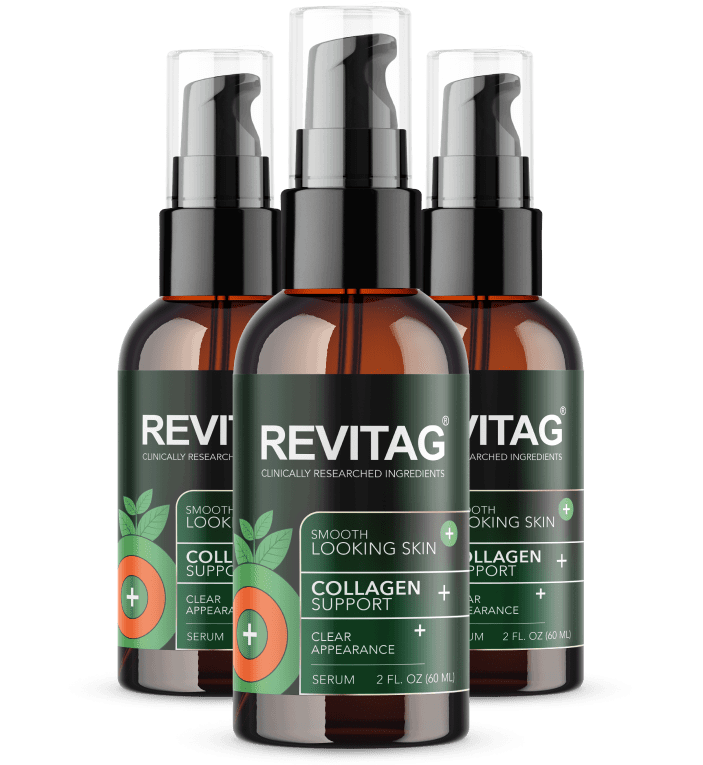
Start building your routine this week by identifying your three essentials — your cleanser, your hydrator, and your SPF. You literally cannot go wrong with these three, and everything else is optional optimization. Many people find that adding supportive products like ReviTag to their existing routine gives their skin the additional nutrients it needs, but the foundation is always those core three steps done consistently and in the right order.
Explore Related Articles
Dive deeper into specific topics covered in this guide:
Final Thoughts
Taking care of your skin after 40 is absolutely doable, and it doesn't require you to become obsessed with anti-aging products or procedures. What it does require is understanding what's happening to your skin, giving it what it actually needs, and staying consistent with habits that work. The good news is that your skin responds beautifully to proper care—you can see real improvements in firmness, texture, and overall appearance when you prioritize sun protection, nutrition, hydration, sleep, and a good skincare routine. Remember that skin health isn't about looking 30 again; it's about supporting your skin so it looks like the healthiest version of your current self. Everyone's skin is different, so what works perfectly for your friend might not be exactly right for you. That's why this guide focuses on principles and research rather than rigid rules. Pay attention to how your skin responds to different approaches, adjust as needed, and don't hesitate to consult a dermatologist if you have specific concerns. The years after 40 can be when your skin looks its absolute best—you have more wisdom about self-care, you understand your skin better, and you're in a position to actually do the things that support it. Start where you are, use what you have, and do what you can. Your skin will thank you.Frequently Asked Questions
At what age should I start worrying about anti-aging skincare?
You don't need to 'worry,' but starting good skincare habits in your 30s and 40s makes a real difference. The most important habit at any age is daily sun protection. Beyond that, focus on basics: gentle cleansing, hydration, and a consistent routine. More targeted anti-aging ingredients become increasingly beneficial after 40.
Is it too late to improve my skin at 50 or 60?
Absolutely not. Your skin has remarkable ability to improve with proper care at any age. You might notice improvements in texture, tone, and firmness within weeks of starting a consistent routine. Changes in collagen and elasticity take longer, but research shows real improvements are possible. Be patient with yourself and consistent with habits.
What's the difference between retinol and retinoids?
Retinol is a vitamin A derivative that's milder and available over-the-counter. Retinoids are prescription-strength and more potent. Both may support skin renewal and collagen, but retinoids work faster. Start with retinol if you're new to this ingredient, as it has fewer side effects while still being effective.
Do I really need to use different products for morning and evening?
Not necessarily the same products, but your routine goals should differ. Morning: focus on sun protection and hydration to prepare your skin for the day. Evening: you can use stronger actives and richer moisturizers since your skin isn't exposed to environmental stressors while you sleep.
Are expensive skincare products actually better than drugstore options?
Not always. Some expensive products are worth it because they contain higher concentrations of active ingredients or have strong research backing them. But many affordable products contain the same beneficial ingredients. Focus on what your skin actually needs rather than price tag—sometimes the best products are mid-range.
How long does it take to see results from skincare changes?
It depends on what you're looking for. Hydration improvements and overall skin appearance often improve within 1-2 weeks. Fine lines and texture changes typically take 4-8 weeks of consistency. Deeper wrinkles and significant firmness changes take 8-12 weeks or longer. Consistency matters more than time.
Should I get Botox or other procedures, or is skincare enough?
That's a personal choice. Many people get excellent results with skincare alone, especially if they start a good routine before severe aging occurs. Others choose procedures and feel great about that choice. Neither option is right or wrong—it's about what aligns with your values and goals.
What should I do if my skin reacts badly to a new product?
Stop using it immediately and return to your previous routine. Once your skin settles (usually a few days), you can try introducing something new if you want. Remember the golden rule: introduce one new product at a time and wait 1-2 weeks before adding another. This way you'll know what caused any reaction.
Can supplements really improve my skin, or is it just marketing?
Some supplements have research supporting their use for skin health—collagen, hyaluronic acid, and astaxanthin show promising evidence. But supplements work best alongside good habits like sun protection, hydration, sleep, and nutrition. They're supportive, not miraculous. Quality matters, so look for third-party testing.
Is my diet really that important for skin health after 40?
Yes. Your skin reflects your overall nutrition. Antioxidant-rich foods, adequate protein, healthy fats, and proper hydration directly support skin function and appearance. You don't need a special diet, but prioritizing nutrient-dense foods makes a measurable difference in how your skin looks and feels.
References & Sources
- Collagen in the physiology and pathophysiology of skin — PubMed/NIH - Journal of Cosmetic Dermatology
- Effects of a nutrient mixture on skin appearance and skin barrier function in postmenopausal women — PubMed/NIH - Journal of Cosmetic Dermatology
- Photoaging and Photoprotection of the Skin — NIH National Center for Biotechnology Information
- The Role of Antioxidants in Skin Aging and Photoprotection — PubMed - Antioxidants Journal
- Hyaluronic Acid: A Key Molecule in Skin Aging — PubMed/NIH - Molecules Journal
- Sleep Quality and Skin Aging: Evidence and Interventions — PubMed - Sleep Health Journal
- Mediterranean Diet and Skin Health in Aging Populations — NIH/PubMed - American Journal of Clinical Nutrition
- Effects of Astaxanthin on Human Skin: A Systematic Review and Meta-Analysis — PubMed - Nutrients Journal